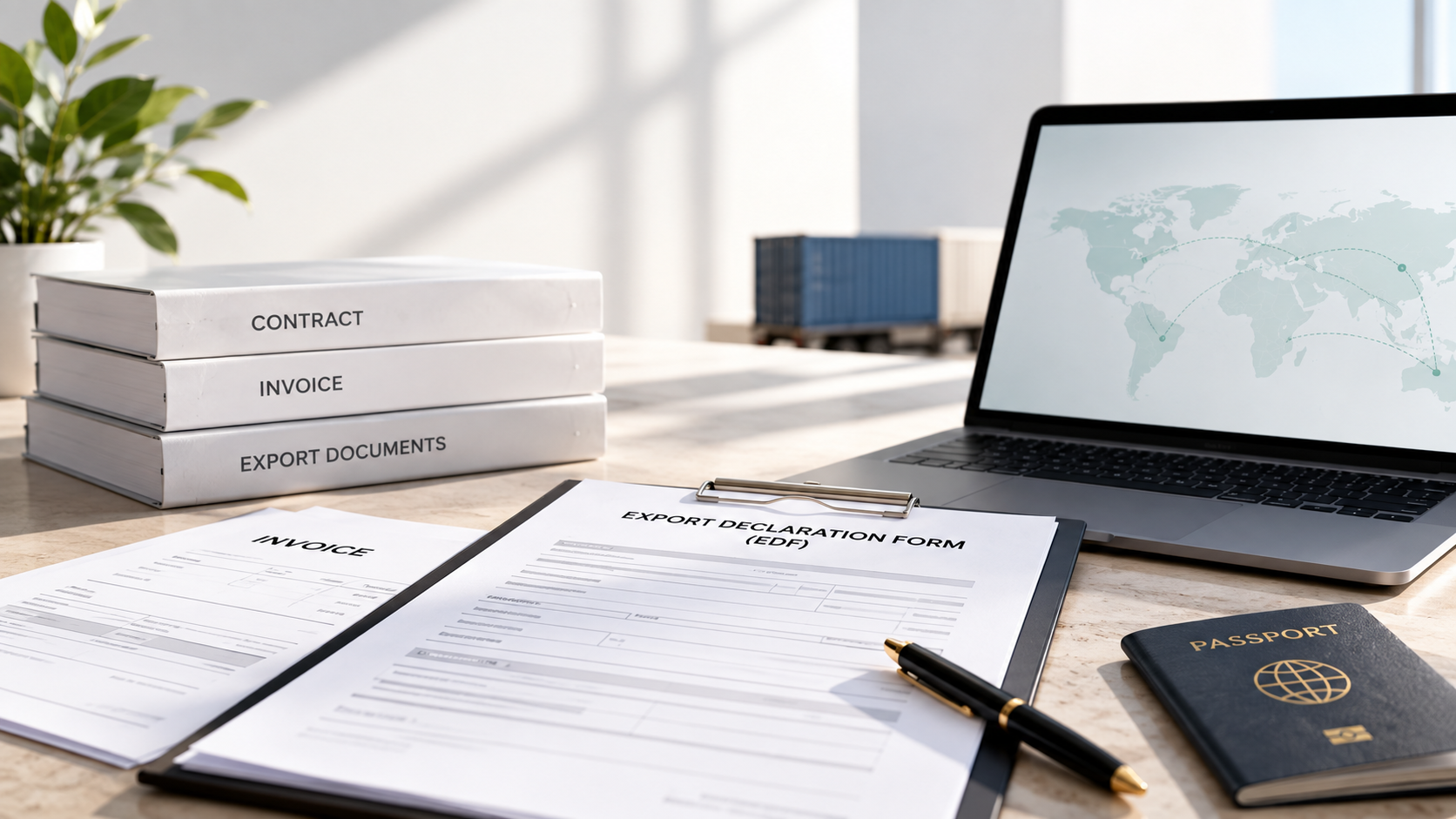
If you’re an Indian SaaS company, software business, IT service provider, consultant, freelancer, agency or BPO receiving payments from overseas, there’s one thing you should start thinking about before 1 October 2026: are your export documents and payment records actually ready for EDF compliance?
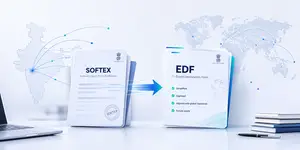
With the new export framework coming into effect, the separate SOFTEX process for software exports is being replaced by a unified Export Declaration Form (EDF) framework for applicable service and software exports.
We’ve already covered what is changing from SOFTEX to EDF in our earlier article. But once you understand the change, the next question is much more practical:
The practical question
“Okay, but what documents and information do I actually need to keep ready for EDF?”
First Things First: What Is EDF?
EDF stands for Export Declaration Form. In simple terms, it is the declaration through which an exporter reports the details and value of an export transaction under India’s foreign exchange framework.
For service and software exporters, EDF becomes part of the broader process of recording the export, receiving the money from the overseas customer and reconciling that payment.
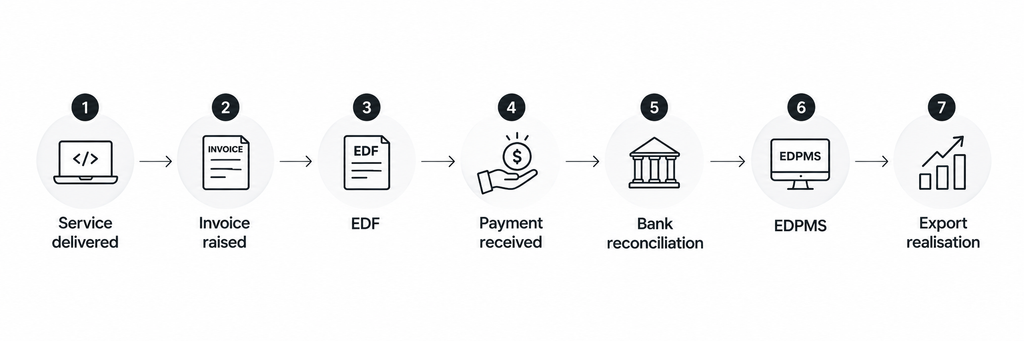
Think of EDF as one link in a larger chain
Service delivered → Invoice raised → EDF → Payment received → Bank reconciliation → EDPMS → Export Realisation
What Documents Does a Service or Software Exporter Need for EDF?
The exact requirements can vary depending on the nature of your export and your Authorised Dealer (AD) bank’s process. However, there are some key documents and information that every service or software exporter should start organising.
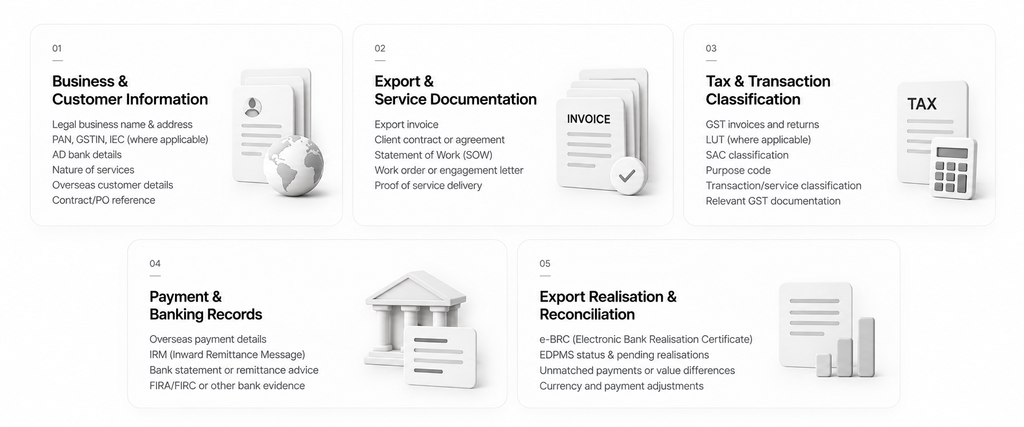
Business & Customer Information
- Legal business name
- Registered address
- PAN
- GSTIN, where applicable
- IEC, where applicable
- AD bank details
- Relevant bank account details
- Nature of business/services
- Overseas customer/company name
- Customer address and country
- Contact details
- Contract/PO reference, where relevant
Keep your business and customer details consistent across your contracts, invoices, bank records and export declarations.
Export & Service Documentation
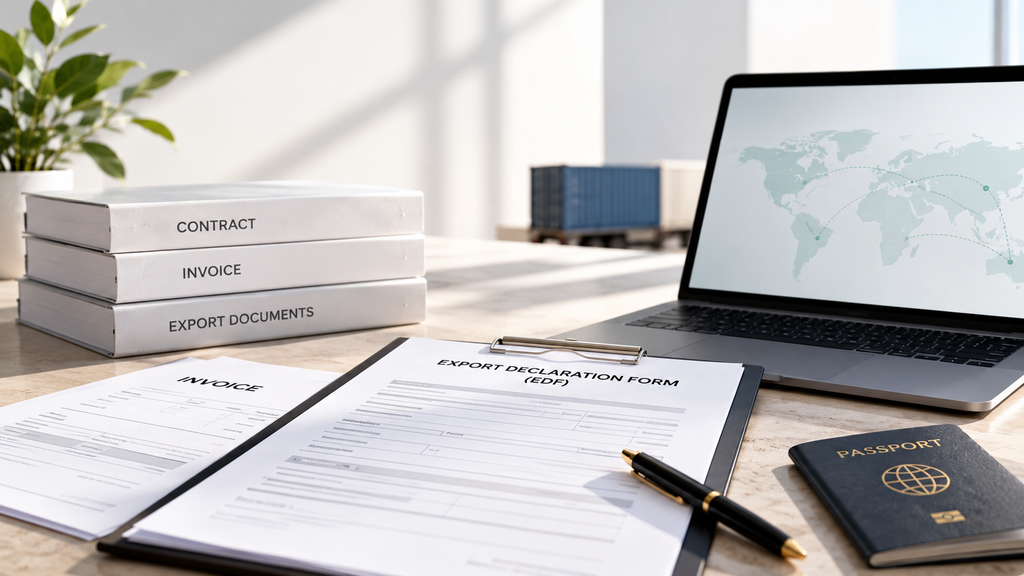
- Export invoice — invoice number, date, exporter and overseas buyer details, service description, service period, currency, invoice value, payment terms, relevant tax/GST details, SAC code where applicable, and other applicable export declarations.
- Client contract or agreement — MSA, SaaS agreement, software licensing agreement, consulting agreement, purchase order, work order, engagement letter or subscription agreement.
- Statement of Work (SOW) or Work Order — project scope, deliverables, milestones, commercial value, payment terms and relevant project or work-order reference.
- Proof that the service was delivered — project completion reports, client acceptance emails, delivery certificates, milestone reports, timesheets, project documentation, deployment records, service reports, subscription records and relevant client communication.
Your documents should create a clear trail connecting what you agreed to deliver, what you invoiced and what you actually delivered. it clear who paid you, why they paid you and which invoice the payment belongs to.
Tax & Transaction Classification
- GST invoices and returns
- LUT, where applicable
- Export invoices
- SAC classification
- Relevant GST documentation
- Applicable purpose code
- Transaction/service classification
- Bank confirmation where there is uncertainty
GST compliance and FEMA/export compliance are not the same thing. Make sure your tax records, SAC classification and purpose code accurately reflect the nature of your export transaction.
Payment & Banking Records
- Overseas payment details — payment date, amount received, currency, customer/sender name, bank reference, UTR/reference number, invoice number, purpose code, IRM details and bank advice/remittance confirmation.
- IRM (Inward Remittance Message) — inward remittance details, relevant bank reference, customer/payment information and invoice allocation.
- Bank statement or remittance advice — payment reference, UTR, currency and amount received.
- FIRA/FIRC or other bank evidence — bank-issued inward remittance or realisation evidence, where issued and applicable.
Your records should clearly connect each overseas payment to the right customer, invoice and export transaction.
What If One Payment Covers Multiple Invoices?
Suppose your customer has three outstanding invoices:
- Invoice 101 – USD 3,000
- Invoice 102 – USD 5,000
- Invoice 103 – USD 2,000
The customer sends one payment of USD 10,000. Instead of recording only “USD 10,000 received,” maintain an allocation:
- USD 3,000 → Invoice 101
- USD 5,000 → Invoice 102
- USD 2,000 → Invoice 103
This makes your export reconciliation much cleaner, especially as your international business grows.
What Should Freelancers and Small Exporters Do?
If you’re a freelancer, developer, consultant, designer, marketing agency or small IT business receiving international payments, don’t assume EDF compliance is only relevant to large software companies.
You don’t necessarily need a giant compliance team. You need a repeatable process that lets you trace every export transaction from the original commercial agreement through to payment realisation.
“What About SaaS Companies?”
SaaS businesses have a slightly different challenge because the service is delivered digitally. A SaaS exporter should consider maintaining:
- SaaS/subscription agreement
- Customer order
- Subscription details
- Invoice
- Subscription period
- Customer details
- Payment records
- Relevant usage/subscription evidence
- Credit notes, if applicable
- Bank remittance records
- IRM
- EDF
- EDPMS records
- Realisation/e-BRC records, where applicable
If you’re handling hundreds or thousands of international subscriptions, spreadsheets can quickly become difficult to manage. That’s when automation becomes increasingly useful.
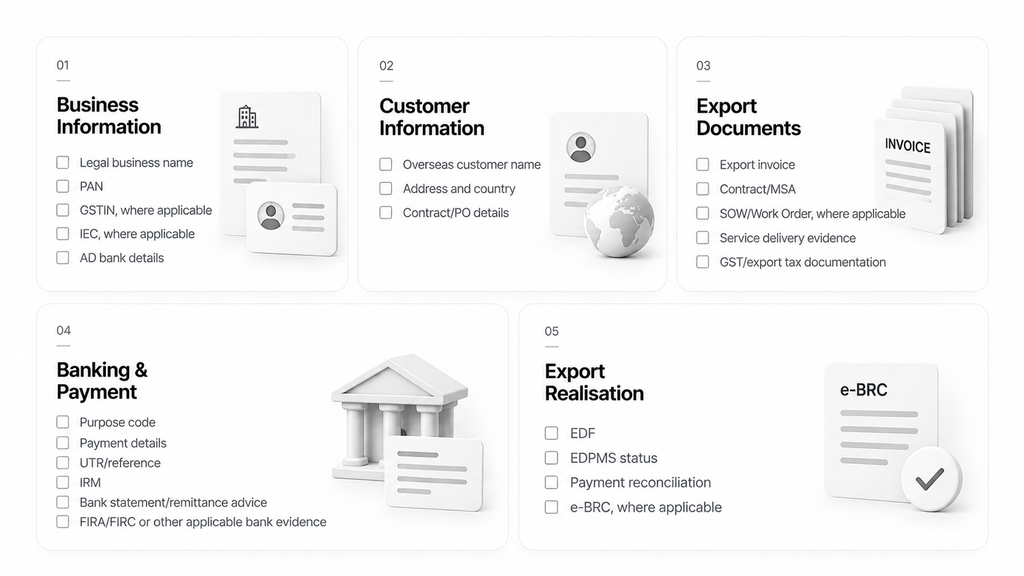
Your EDF Compliance Checklist
Use this as a quick check before your next export transaction:
Business Information
☐ Legal business name
☐ PAN
☐ GSTIN, where applicable
☐ IEC, where applicable
☐ AD bank details
Customer Information
☐ Overseas customer name
☐ Address and country
☐ Contract/PO details
Export Documents
☐ Export invoice
☐ Contract/MSA
☐ SOW/Work Order, where applicable
☐ Service delivery evidence
☐ GST/export tax documentation
Banking & Payment
☐ Purpose code
☐ Payment details
☐ UTR/reference
☐ IRM
☐ Bank statement/remittance advice
☐ FIRA/FIRC or other applicable bank evidence
Export Realization
☐ EDF
☐ EDPMS status
☐ Payment reconciliation
☐ e-BRC, where applicable
The Real Challenge Isn’t Filing EDF. It’s Reconciliation.
For many exporters, the problem won’t simply be “How do I file an EDF?” The bigger problem will be: “Can I connect every export declaration with the right invoice, customer and payment?”
When you have a handful of international transactions, that’s manageable. But imagine you’re handling 100 invoices, 20 overseas customers, multiple currencies, partial payments and monthly subscriptions. Suddenly, a simple spreadsheet can turn into a reconciliation headache.
The key takeaway
Your export compliance process should be designed around the entire transaction lifecycle — not just the declaration.
How HiWiPay Can Help
At HiWiPay, we believe export compliance shouldn’t mean spending hours jumping between spreadsheets, invoices, bank records and compliance portals.
HiWiPay EXIM is built to help exporters manage their international payment and export compliance workflows in one place.
From export declarations and inward remittances to reconciliation, EDPMS tracking and e-BRC, the objective is to make the journey easier to manage.
Final Thought
The move from SOFTEX to EDF isn’t just about replacing one form with another.
For service and software exporters, it’s an opportunity to take a closer look at how you manage contracts, invoices, payments, declarations and export realisation records.
Because when your export business grows, compliance shouldn’t become a roadblock. Your documentation should work with your business — not slow it down.
A Useful EDF-Readiness Test
“If my bank asks me to show the complete trail for one overseas payment tomorrow, can I find everything in one place?”
If the answer is yes, you’re on the right track. If the answer is no, now is a good time to start organising.
Important Note
The unified EDF framework is scheduled to take effect from 1 October 2026. The exact documentation and operational process may depend on the nature of the export transaction and the requirements of your Authorised Dealer (AD) bank.
Always confirm the latest applicable requirements with your AD bank and relevant authorities before filing.
This article is for general informational purposes only and should not be considered legal, tax or regulatory advice.